
On October 28, 2025, a quiet yet historic event occurred in the skies over California. NASA, in partnership with Lockheed Martin, flew the X-59 for the first time. This is the one designed to shatter the sound barrier without shaking windows or rattling nerves on the ground.
The X-59 is a sleek, needle-shaped aircraft that is part of NASA’s Quesst Mission, aimed at bringing back supersonic travel in a way that doesn’t disturb people below. For decades, jets flying faster than the speed of sound have been banned over land due to the loud sonic booms they create. The X-59 could change that.
A Historic Occasion
The first flight launched from Lockheed Martin’s Skunk Works in Palmdale, California. After about an hour in the air, it touched down safely near NASA’s Armstrong Flight Research Center. This wasn’t a full-speed run. It was a subsonic test to make sure the basics were solid: Handling, performance, and safety. According to Lockheed Martin, everything went just right.
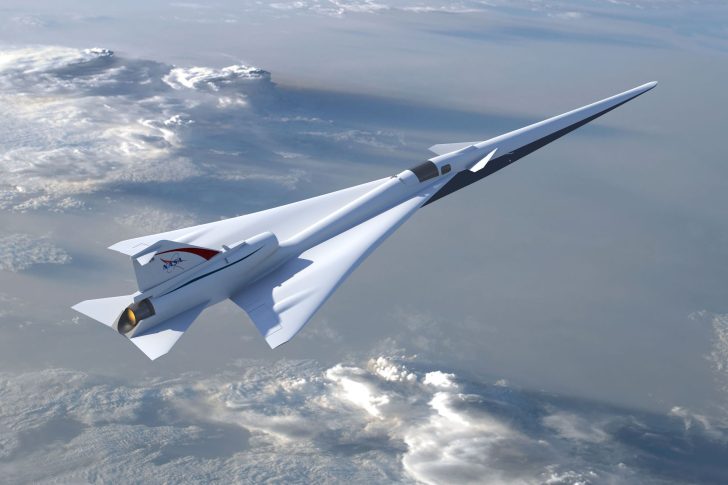
GTN / The plane reached 240 mph at an altitude of 12,000 feet. That is not close to its top speed, but the goal wasn’t speed. It was confidence.
Engineers needed to know the jet could fly straight, respond properly, and behave as expected. That is the foundation before pushing it harder in future tests.
What makes the X-59 special isn’t just its speed. It is the way it handles the sound it creates. Supersonic planes usually send out a loud, cracking boom that can be heard miles away. The X-59 is built to turn that boom into a much softer thump, something like a car door closing in the distance.
This magic happens because of its unusual shape. The X-59 has an incredibly long nose that stretches out to about a third of its total 100-foot length. It also has its engine mounted on top, rather than underneath. This odd design spreads out the shockwaves that form when a jet breaks the sound barrier. Instead of merging into one powerful blast, they stay separate, weaker, and far less noisy.
But that long nose creates one big problem. The pilot can’t see forward. There is no windshield view like in a regular cockpit. Instead, the X-59 uses a high-res camera system called XVS, short for eXternal Vision System. It feeds a 4K image to a monitor inside, giving the pilot a clear view of the path ahead.
What's Next?
This first test flight is just the beginning. Over the coming months, NASA plans to increase the jet’s speed and altitude gradually. Eventually, it is expected to fly at Mach 1.4, approximately 925 mph, at an altitude of 55,000 feet. These test flights will expand the so-called "flight envelope," pushing the X-59 closer to its full capability.
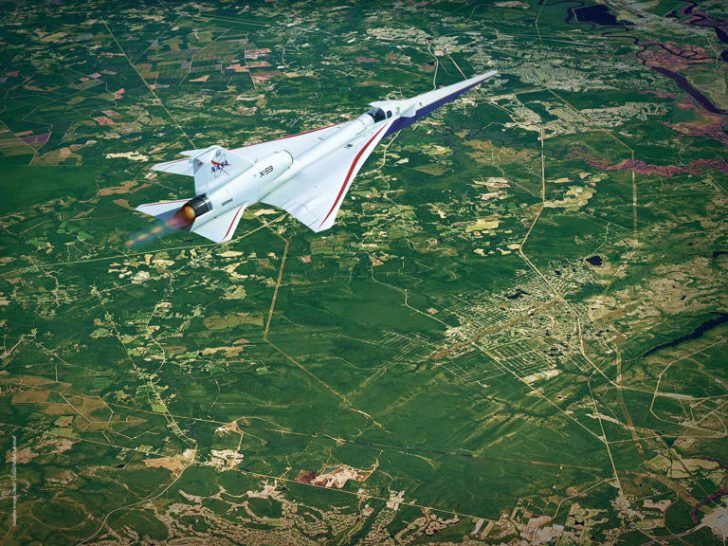
The News / NASA plans to fly the X-59 over select cities across the U.S. The goal is to see how people on the ground react to the quiet sonic thumps.
These community response flights will help scientists understand what level of noise is acceptable and how the public feels about it.
That reaction matters more than anything else. All the tech in the world doesn’t mean much if it still bothers people below. NASA will gather detailed data from these flights and hand it over to regulators, including the FAA and other global agencies. They will use it to rethink the old rules about supersonic flight over land.
If the data proves that quiet supersonic travel is safe and tolerable, it could lead to a huge change. The decades-long ban on flying faster than sound over land could finally be lifted.